
Wildside futures gallery
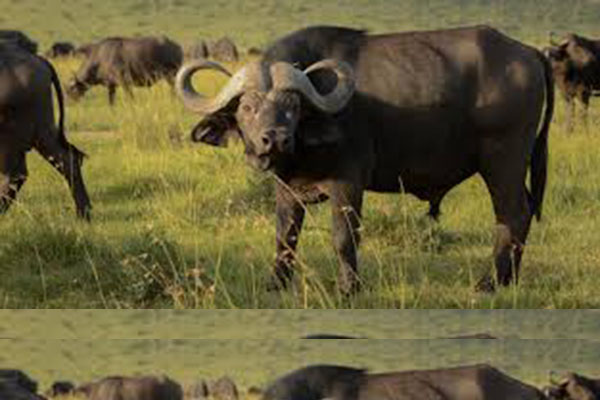 Kenya Buffalo is a massive, moody and dangerous animal. Its main diet is grass, but at times leaves and buds make up the greater part of its feeding. It kills more people than lions or crocodiles.
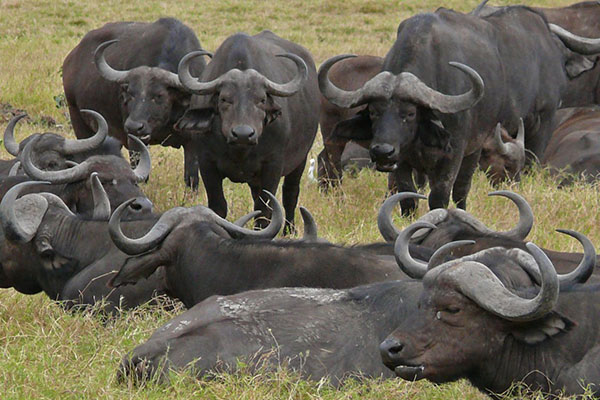 Old lone male buffaloes even lie in wait and ambush people, and it is dangerous for tourists to walk outside the grounds of a lodge or camp between a buffalo herd and their mid-morning drink.
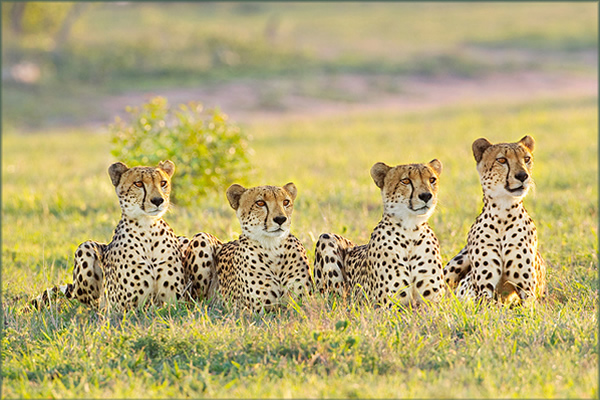 The cheetah is one of the most impressive animals you can hope to see — sleek, streamlined and menacing. It’s found in small numbers in all of Kenya’s major game reserves — Nairobi, Amboseli, Masai Mara, Tsavo, Samburu, Buffalo Springs, Marsabit and Meru.
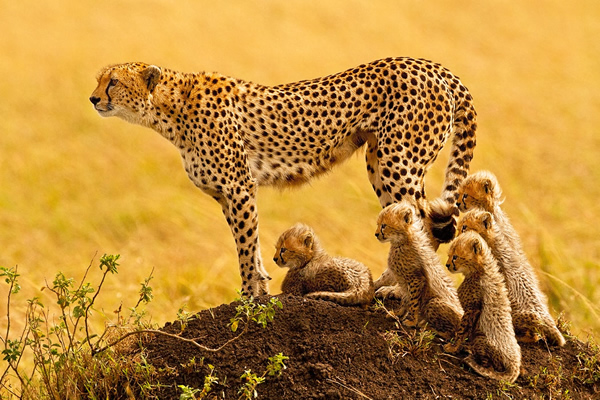 Similar in appearance to the leopard, the cheetah is longer and lighter in the body, has a slightly bowed back and a much smaller and rounder face. It stands around 80 cm at the shoulder, measures around 210 cm in length (including the tail) and weighs anything from 40 to 60 kg.
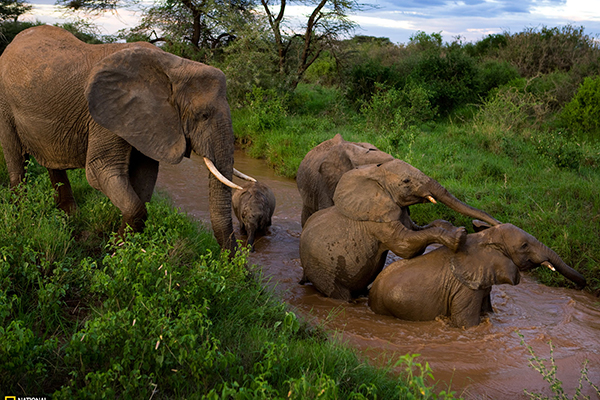 Elephants in Kenya– It is the world’s largest land animal. Kenya has about 30,000 elephants, with an estimated 10,000 in the, Tsavo/Mkomazi ecosystem. One of the best places to see elephants is in the Amboseli Game Reserve. This is the home of late ‘Echo,’ the matriarch one of the
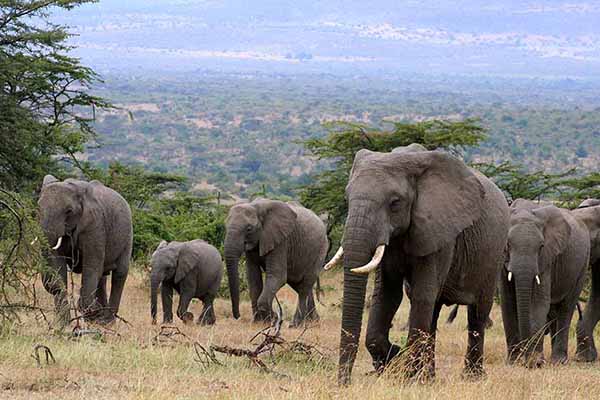 herds studied by Cynthia Moss and featured in the book and documentary ‘Echo of the Elephants.
The Kenya Elephant is entirely vegetarian and eats variety of food — grass, leaves, shoots, flowers and bark. Its diet also includes a variety of crops — maize, bananas,
herds studied by Cynthia Moss and featured in the book and documentary ‘Echo of the Elephants.
The Kenya Elephant is entirely vegetarian and eats variety of food — grass, leaves, shoots, flowers and bark. Its diet also includes a variety of crops — maize, bananas,
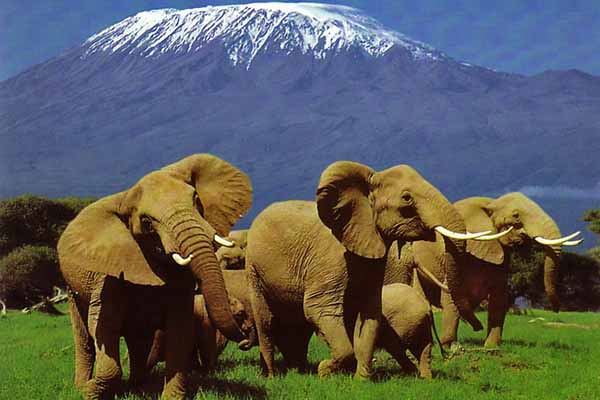 mangoes and sweet potatoes — thus bringing it into conflict with man. Interestingly, elephants are partial to over-ripe fruits ostensibly because they make them drunk! They are very social and females stand watch over their dead young and even cover the body with branches and twigs.
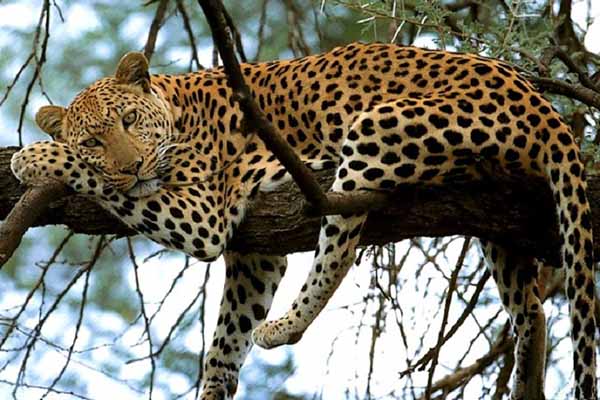 The leopard is perhaps the most graceful and agile of the large cats. A powerfully built animal which uses cunning to catch its prey, it is present in all the major game reserves but is difficult to find as it is nocturnal and spends the day resting on branches of trees, often up to five metres above the ground.
It is as agile as a domestic cat in climbing such trees and this is also where it carries its prey so that it’s out of the way of other scavengers which might contest the kill.
The leopard’s coat is usually short and dense with numerous black spots on a yellowish background. The underparts are white and less densely spotted. In addition, the coats of leopards found in open country are generally lighter than those in wooded country.
Leopard are solitary animals except during the mating season when the male and female live together. The gestation period is three months and a litter usually consists of up to three cubs. They prey on a variety of birds, reptiles and mammals including large rodents, rock hyrax, warthog, smaller antelopes and monkeys (especially baboon), and occasionally take domestic animals such as goat, sheep, poultry and dogs.
The leopard’s coat is usually short and dense with numerous black spots on a yellowish background. The underparts are white and less densely spotted. In addition, the coats of leopards found in open country are generally lighter than those in wooded country.
Leopard are solitary animals except during the mating season when the male and female live together. The gestation period is three months and a litter usually consists of up to three cubs. They prey on a variety of birds, reptiles and mammals including large rodents, rock hyrax, warthog, smaller antelopes and monkeys (especially baboon), and occasionally take domestic animals such as goat, sheep, poultry and dogs.
This wide range of prey explains why they are still able to survive even in areas of dense human settlement long after other large predators have disappeared. But their presence is generally unwelcome since they occasionally turn human-eater. It also explains why they are found in very varied habitats ranging from semi-desert to dense forest and as high as the snow line on Mt Kenya and Kilimanjaro.
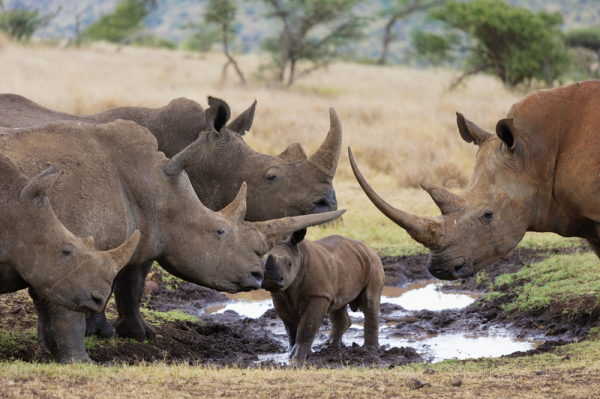 The black rhino is a solitary animal with a hooked and flexible upper lip.
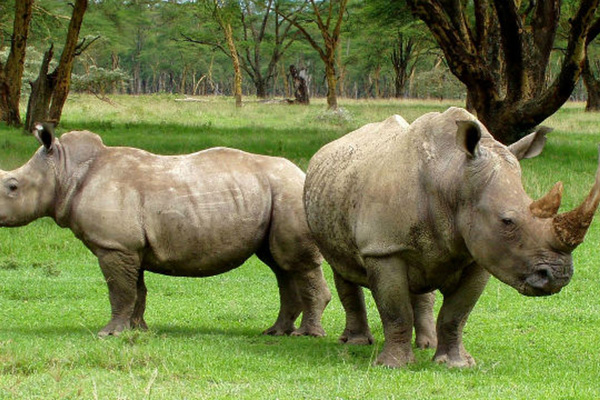
On its part the white rhino has a wide upper lip and a Iarge hump at the top of its neck. The former feeds on leaves, shoots and buds, but the latter exclusively on grass and is less solitary than its black counterpart. They live in small family groups. They are found in Lake Nakuru, Nairobi, Meru and Tsavo West national and the 0l Pejeta and Lewa conservancy.